
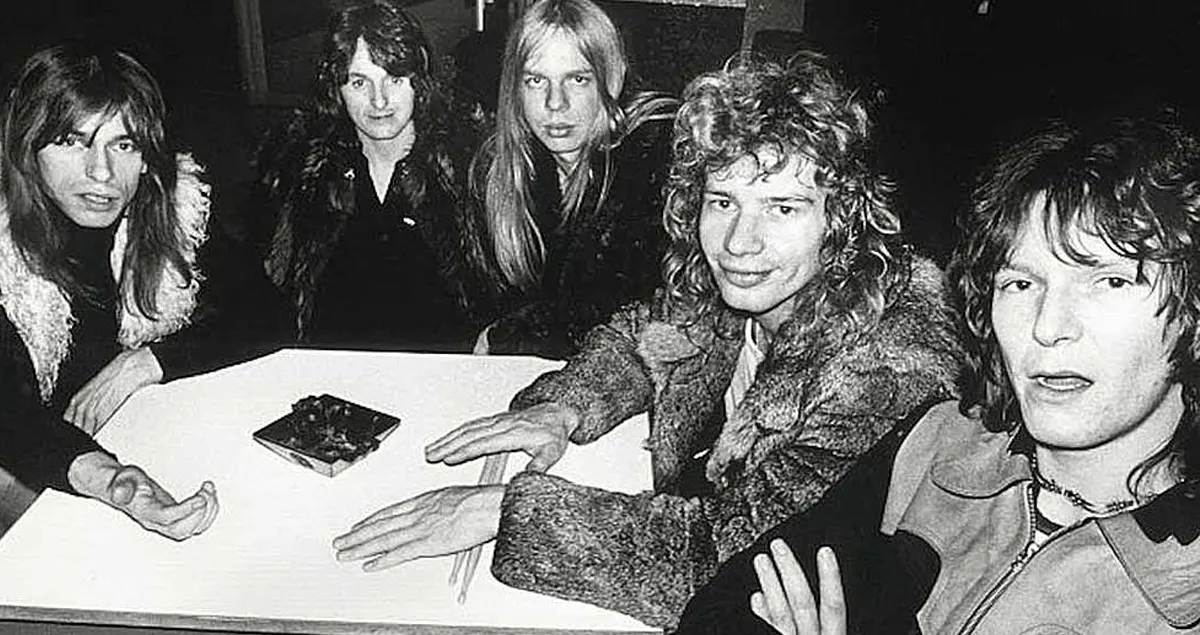
Yes: The Band That Turned Progressive Rock into Musical Architecture
Progressive rock has always been associated with ambition, experimentation, and scale, but few bands transformed those qualities into a coherent musical language as decisively as Yes. Where early progressive acts were still testing the boundaries of rock form, Yes approached music as something closer to architecture: layered, deliberate, and designed to elevate complexity into clarity. Their work did not merely expand rock’s possibilities; it systematized them.
Yes did not invent progressive rock, but they defined how it could sound when virtuosity, structure, and idealism aligned. In doing so, they helped transform prog from a loose movement into a recognizable musical discipline.
Prog Rock History — Where Yes Stands
When Yes emerged at the end of the 1960s, rock music was undergoing a fundamental transition. Psychedelia had loosened structural expectations, jazz and classical influences were creeping into popular music, and the album was beginning to matter more than the single. Many bands were experimenting, but few were organizing those experiments into a stable form.
Yes entered this environment with a distinctive instinct: rather than deconstructing rock, they sought to elevate it. Their music emphasized harmonic richness, extended compositions, and instrumental dialogue, but always within a sense of balance and uplift. Unlike darker or more confrontational progressive contemporaries, Yes framed complexity as something aspirational rather than abrasive.
In the broader history of prog rock, Yes represent the moment when ambition became codified. They demonstrated that long-form composition, technical proficiency, and spiritual or abstract themes could coexist within a sound that was grand yet accessible. This balance would become a blueprint for countless progressive acts that followed.
Creative Phases and Lineup Evolution
The Early Exploratory Phase (1969–1971)
Yes began as a band still searching for its identity. Their debut Yes (1969) and Time and a Word (1970) leaned heavily on covers and orchestral embellishments, reflecting a group testing the limits of arrangement rather than composition. These albums hinted at technical promise but lacked a unified voice.
The departure of keyboardist Tony Kaye and the arrival of Rick Wakeman marked a turning point. With Wakeman’s classical training and flair for synthesizers, Yes found a tonal center that aligned with their ambitions.
The Classic Lineup Era (1971–1974)
The period spanning The Yes Album, Fragile, and Close to the Edge represents the crystallization of Yes’s artistic identity. The lineup of Jon Anderson, Steve Howe, Chris Squire, Rick Wakeman, and either Bill Bruford or Alan White combined individual virtuosity with collective discipline.
During this phase, Yes perfected a musical language built on interlocking parts rather than dominance by any single instrument. Bass lines carried melodic weight, guitars functioned as orchestral voices, keyboards expanded harmonic depth, and vocals floated above the structure as a guiding presence. This era produced the band’s most enduring and influential work.
Expansion, Excess, and Fragmentation (1974–1978)
Tales from Topographic Oceans marked the band’s most controversial creative statement. Inspired by spiritual texts, the album stretched a single concept across four extended compositions. For some, it represented the ultimate expression of progressive ambition; for others, it exposed the genre’s tendency toward excess.
Internal tensions and shifting personnel followed, and while albums like Relayer and Going for the One retained moments of brilliance, the sense of unified purpose began to fracture.
Adaptation and Reinvention (1980s)
The 1980s saw Yes adapting to a radically different musical landscape. With 90125, the band embraced a more streamlined, radio-friendly sound. While commercially successful, this phase sparked ongoing debates about identity, authenticity, and the boundaries of progressive rock itself.
Albums by Function, Not Ranking
The Defining Album: Fragile (1971)
Fragile introduced the world to Yes as a fully realized progressive force. The album balances collective compositions with individual showcases, highlighting each member’s contribution to the band’s identity. It established the group’s sonic vocabulary and clarified their approach to musical structure.
The Architectural Peak: Close to the Edge (1972)
Often regarded as Yes’s crowning achievement, Close to the Edge represents progressive rock as pure form. Its title track unfolds with symphonic logic, while shorter pieces retain precision and purpose. The album exemplifies how complexity can serve coherence rather than overwhelm it.
The Divisive Statement: Tales from Topographic Oceans (1973)
This album functions less as a collection of songs and more as a philosophical experiment. Its ambition redefined the outer limits of prog, forcing listeners to confront the question of how much scale and abstraction the genre could sustain.
The Reinvention Album: 90125 (1983)
90125 is significant not for its adherence to progressive ideals, but for its demonstration of adaptability. It shows how progressive musicianship could be translated into a contemporary format, even at the cost of alienating parts of the band’s original audience.
Themes, Narrative, and Lyrical World
Yes’s lyrical approach has always favored abstraction over narrative. Rather than telling stories, their songs evoke states of mind, philosophical ideas, and spiritual aspirations. Jon Anderson’s vocals function less as exposition and more as an additional instrument, emphasizing tone and emotion over literal meaning.
This emphasis on transcendence aligns with the band’s musical goals. Lyrics and music operate in parallel, reinforcing an atmosphere of elevation and exploration rather than grounding the listener in specific events or characters.
Where to Start Listening — Entry Points by Listener Type
- Classic rock listeners: The Yes Album
- Album-oriented prog listeners: Close to the Edge
- Virtuosity-focused listeners: Fragile
- Experimental-minded listeners: Relayer
- Casual or modern listeners: 90125
Each entry point reveals a different aspect of the band’s identity, reflecting the breadth of their catalog.
Why Yes Can Be Challenging
Despite their accessibility, Yes can be difficult for new listeners. Extended compositions demand attention, instrumental density can feel overwhelming, and abstract lyrics resist immediate interpretation. For some, the band’s emphasis on polish and idealism lacks the raw tension found in other progressive acts.
These challenges are not flaws but consequences of Yes’s commitment to musical structure and refinement.
Influence and Legacy
Yes influenced generations of progressive musicians by demonstrating how complexity could coexist with clarity. Their approach to arrangement, harmony, and long-form composition shaped both classic prog and later neo-prog movements. Even outside the genre, their emphasis on precision and scale left a lasting imprint on rock music’s evolution.
What Prog Rock Would Lose Without Yes
Without Yes, progressive rock would lack its most convincing argument for elegance. The genre might still exist as an experimental space, but it would be missing the sense of balance and uplift that Yes brought to its core. They proved that progressive music could aspire not only to challenge, but to inspire.
In this sense, Yes did not simply participate in progressive rock — they defined its architecture.