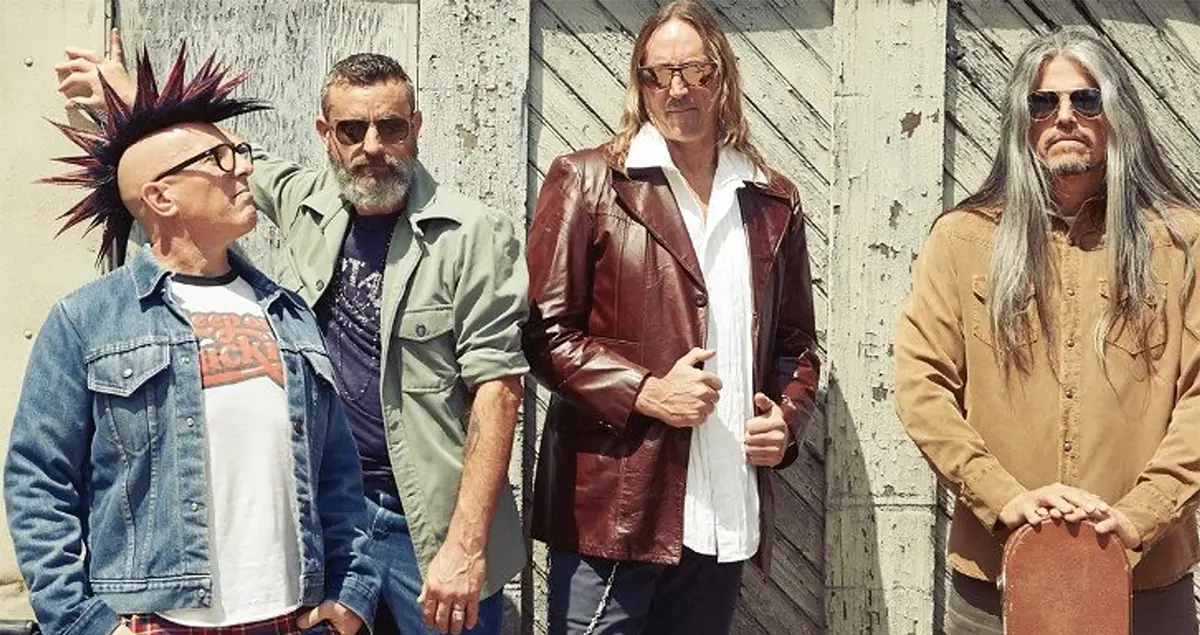
Tool: Ritual, Mathematics, and the Inner Transformation of Progressive Music
Progressive rock has always flirted with complexity and transcendence, but Tool approached progression as discipline rather than display. Their music does not seek to impress through virtuosity alone; it functions as a ritual system, built on repetition, asymmetry, and psychological intensity. Tool demand immersion, patience, and surrender to process.
Tool are not storytellers in the traditional sense.
They are architects of altered states.
Prog Rock History — Where Tool Stand
Tool emerged in the 1990s, long after progressive rock’s classic era had fragmented. While many modern prog acts leaned on revival or technical extremity, Tool pursued a different lineage—one that fused progressive structure with metal weight, minimalism, and philosophical gravity.
Historically, Tool occupy a crucial bridge between progressive rock’s conceptual ambition and progressive metal’s physical intensity. They stripped prog of ornamentation and rebuilt it around rhythm, texture, and temporal manipulation. In doing so, they reframed progressive music as something experiential rather than descriptive.
Within the broader prog continuum, Tool represent progression through constraint and focus.
Creative Phases and Singular Identity
Emergence and Raw Intensity (1992–1996)
Early Tool recordings are confrontational and visceral. While structures remain relatively direct, rhythmic tension and emotional severity dominate. This phase establishes the band’s commitment to discomfort as a legitimate artistic tool.
The foundations of their later discipline—repetition, dynamic control, and psychological pressure—are already present.
Structural Expansion and Conceptual Depth (1996–2001)
This period marks Tool’s full progressive awakening. Song lengths expand, rhythmic frameworks grow more complex, and conceptual continuity becomes central. Rather than layering ideas, Tool excavate them, allowing themes to evolve slowly through recurrence and variation.
Here, complexity is internalized rather than showcased.
Refinement, Precision, and Ritual (2001–2006)
Tool’s music during this era emphasizes control. Rhythms interlock with mathematical precision, textures breathe, and silence becomes structural. The band eliminate excess, focusing on density through repetition rather than speed or ornament.
This phase defines Tool’s mature identity: austere, deliberate, and immersive.
Distance and Monumental Return (Post-2006)
Extended silence followed by a carefully measured return reinforces Tool’s refusal to operate on industry timelines. Their later work feels less like evolution and more like continuation under deeper scrutiny, maintaining identity while extending scale.
Albums by Function, Not Ranking
The Transformational Breakthrough: Ænima (1996)
This album marks Tool’s conceptual emergence. Emotional intensity, philosophical questioning, and structural ambition converge, establishing the band’s ritualistic approach to progression.
The Structural Manifesto: Lateralus (2001)
Often regarded as Tool’s defining work, Lateralus integrates mathematical frameworks with emotional ascent. Songs unfold according to internal logic rather than conventional development, embodying progression as process.
The Controlled Monolith: 10,000 Days (2006)
This album deepens Tool’s introspective tendencies. Themes of grief, transcendence, and human limitation are explored through restrained yet massive structures.
The Temporal Expansion: Fear Inoculum (2019)
Here, Tool emphasize duration and patience. Long-form compositions unfold with meditative inevitability, reinforcing the band’s commitment to ritual over immediacy.
Rhythm, Mathematics, and Sonic Discipline
Tool’s defining feature is rhythm as structure. Danny Carey’s drumming anchors compositions through polyrhythms, odd meters, and cyclical patterns that feel organic rather than calculated. Bass and guitar lock into repetitive figures, creating tension through subtle variation.
Vocals function as invocation rather than narrative. Lyrics are sparse, symbolic, and often confrontational, prioritizing emotional impact over explanation.
The result is music that operates on both physical and psychological levels.
Where to Start Listening — Entry Points by Listener Type
- Concept-driven listeners: Lateralus
- Heavier prog fans: Ænima
- Atmosphere seekers: 10,000 Days
- Patient listeners: Fear Inoculum
- Metal-to-prog explorers: Ænima
Each entry point reveals a different balance between intensity and control.
Why Tool Can Be Challenging
Tool demand time. Their long compositions resist casual listening, their repetition can feel oppressive, and emotional release is often withheld. Listeners seeking melody-driven immediacy may find their discipline austere.
Yet this austerity defines Tool’s power. They do not entertain; they initiate.
Influence and Legacy
Tool reshaped progressive music’s modern identity. They influenced progressive metal, post-metal, and experimental rock by proving that heaviness and intellect need not be opposites. Their emphasis on rhythm, repetition, and psychological depth established a new progressive ethic grounded in focus rather than excess.
More importantly, Tool demonstrated that progressive music could remain mysterious and demanding in an age of immediacy.
What Progressive Music Would Lose Without Tool
Without Tool, progressive music would lose its most convincing synthesis of ritual and discipline. The genre might still explore complexity or intensity, but it would lack a model for progression as inner transformation rather than outward expansion.
Tool did not ask how far music could go.
They asked how deeply it could penetrate.
And they built their entire universe around that question.