
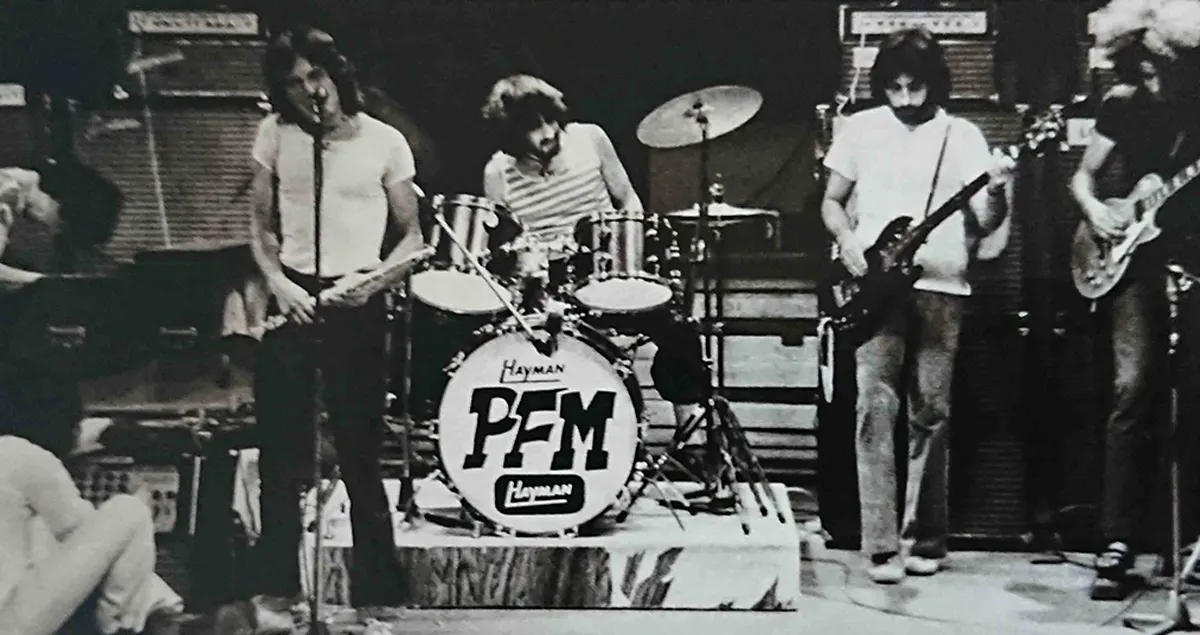
Premiata Forneria Marconi: Mediterranean Lyricism and the European Refinement of Progressive Rock
Progressive rock is often narrated through British ambition or North American modernization, but Premiata Forneria Marconi offered a distinctly European alternative. Rooted in classical tradition, folk melody, and Mediterranean sensibility, PFM demonstrated that progressive rock could be elegant without being distant, sophisticated without being severe.
Rather than overwhelming the listener, PFM focused on flow, warmth, and melodic continuity — a progressive language shaped as much by feeling as by form.
Prog Rock History — Where Premiata Forneria Marconi Stand
Emerging from Italy in the early 1970s, Premiata Forneria Marconi entered a progressive scene dominated by British aesthetics. While sharing the genre’s commitment to extended composition and technical precision, PFM approached these elements through a different cultural lens.
Italian progressive rock placed greater emphasis on melody, romanticism, and emotional immediacy. PFM became its most internationally visible representative, bridging continental European musical traditions with the structural ambitions of prog. Their work demonstrated that progressive rock was not a single national style, but a trans-European conversation.
Historically, PFM stand as the genre’s most successful example of how local musical identity could enrich progressive rock rather than dilute it.
Creative Phases and Musical Identity
Early Foundations and Classical Fluency (1971–1972)
PFM formed with a strong classical background. Early compositions reveal fluency in symphonic structure, folk motifs, and jazz phrasing. Unlike many contemporaries, their arrangements feel naturally integrated, never forcing classical ideas into rock frameworks.
This period established the band’s defining traits: fluid violin lines, lyrical keyboards, and a rhythm section that prioritized momentum over force.
International Expansion and Confidence (1972–1974)
As PFM gained international attention, they refined their sound without abandoning regional character. English-language releases allowed broader reach, but the band retained their melodic identity. Rather than chasing spectacle, they emphasized cohesion and accessibility within complex forms.
This phase represents PFM at their most balanced — progressive in structure, but inviting in tone.
Refinement and Adaptation (Mid–Late 1970s)
As progressive rock’s mainstream presence declined, PFM adapted subtly. Jazz influences increased, arrangements tightened, and compositions became more concise. These changes reflect evolution rather than compromise, preserving the band’s melodic core while responding to a shifting musical climate.
Albums by Function, Not Ranking
The Defining Statement: Per un Amico (1972)
This album crystallizes PFM’s identity. Flowing compositions, melodic richness, and structural clarity combine to form one of European progressive rock’s most cohesive works. It exemplifies the band’s ability to balance complexity with warmth.
The International Bridge: Photos of Ghosts (1973)
An English-language adaptation of earlier material, this album introduced PFM to a global audience. While translations alter nuance, the music’s elegance and momentum remain intact, showcasing the band’s universal appeal.
The Melodic Peak: L’Isola di Niente (1974)
Here, PFM refine their approach further. The album emphasizes atmosphere and melodic continuity, offering a more introspective take on progressive structure.
The Transitional Record: Chocolate Kings (1975)
This album reflects PFM’s engagement with broader rock trends while maintaining progressive discipline. It illustrates the band’s willingness to adapt without abandoning identity.
Musical Language and European Sensibility
PFM’s music prioritizes line and movement. Melodies unfold organically, instruments converse rather than compete, and transitions feel fluid rather than abrupt. Classical influence appears not as quotation, but as instinct — shaping phrasing, harmony, and pacing.
Lyrics, particularly in Italian, enhance the music’s lyrical quality, reinforcing the sense of emotional continuity that defines the band’s sound.
Where to Start Listening — Entry Points by Listener Type
- European prog explorers: Per un Amico
- Melody-focused listeners: L’Isola di Niente
- International listeners: Photos of Ghosts
- Jazz-inclined prog fans: Chocolate Kings
- First-time PFM listeners: Per un Amico
Each entry point highlights PFM’s commitment to melodic sophistication within progressive form.
Why Premiata Forneria Marconi Can Be Challenging
PFM’s subtlety may feel understated to listeners accustomed to dramatic contrast or virtuosic display. Their emphasis on flow over confrontation requires patience and attentiveness. Language barriers can also shape perception, particularly for non-Italian listeners.
Yet these qualities are central to their value. PFM reward immersion rather than impact, offering depth through continuity rather than shock.
Influence and Legacy
Premiata Forneria Marconi influenced progressive rock by expanding its geographic and emotional range. They validated the role of national musical identity within a global progressive framework, encouraging other European scenes to develop their own voices.
Their success demonstrated that progressive rock could be inclusive rather than monolithic.
What Prog Rock Would Lose Without Premiata Forneria Marconi
Without PFM, progressive rock would lose its most convincing expression of European lyricism. The genre might remain structurally ambitious and intellectually rigorous, but it would lack a sense of romantic continuity and cultural breadth.
PFM showed that progressive rock could feel sunlit rather than austere, without sacrificing depth.
They did not redefine prog through force.
They enriched it through grace.