
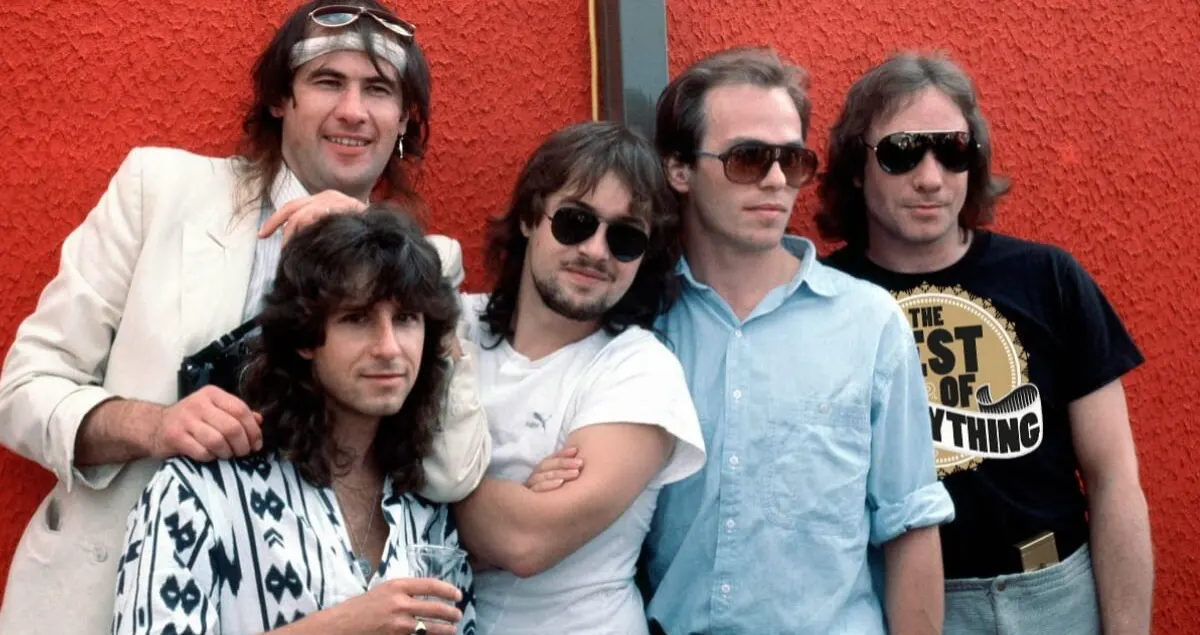
Marillion: Narrative Emotion, Neo-Prog Identity, and the Human Continuum of Progressive Rock
When progressive rock entered the 1980s, it faced a decisive question: could it survive without spectacle, excess, or nostalgia? Marillion answered by returning to something older and more durable than style—emotion and narrative. Rather than reviving prog through virtuosity or scale, they reframed it through songwriting, character, and psychological intimacy.
Marillion did not resurrect progressive rock.
They humanized it for a new era.
Prog Rock History — Where Marillion Stand
Marillion emerged at a time when classic progressive rock was widely considered finished. Punk had stripped rock of excess, radio favored immediacy, and progressive ambition seemed out of step with the cultural mood. Instead of denying this reality, Marillion adapted to it.
They preserved long-form thinking, thematic cohesion, and expressive keyboards, but embedded these elements within concise song forms. In doing so, Marillion established neo-prog—not as revivalism, but as continuation. Their work connected the emotional storytelling of Genesis with a modern sense of vulnerability and restraint.
Historically, Marillion occupy the bridge between the classic era and progressive rock’s late-20th-century survival.
Creative Phases and Evolving Identity
Formation and the Neo-Prog Breakthrough (1981–1984)
Marillion formed with a clear narrative focus. Early material emphasized character-driven lyrics, expressive vocal delivery, and atmospheric keyboard textures. The band’s approach felt progressive without grandiosity, restoring ambition through songcraft rather than scale.
This phase established neo-prog as a legitimate movement, distinct from both classic symphonic prog and contemporary pop rock.
Emotional Consolidation (Mid-1980s)
During this period, Marillion refined their balance between accessibility and depth. Songs remained structurally ambitious, but emotional immediacy took precedence. The band demonstrated that progressive ideas could thrive within radio-length forms without dilution.
The result was music that felt personal rather than monumental.
Reinvention and Independence (1990s–2000s)
As musical trends shifted, Marillion chose independence over compromise. Freed from industry expectations, they explored introspective themes, atmospheric arrangements, and experimental structures on their own terms.
This era reaffirmed Marillion’s identity as a progressive band defined by intent, not convention.
Albums by Function, Not Ranking
The Neo-Prog Declaration: Script for a Jester’s Tear (1983)
This album introduces Marillion’s narrative voice. Lyrical vulnerability and theatrical delivery combine with restrained progressive structures, establishing a template for neo-prog storytelling.
The Emotional Centerpiece: Misplaced Childhood (1985)
Often regarded as the band’s defining work, this album presents a unified emotional arc rather than a traditional concept narrative. Its cohesion and melodic strength demonstrate how progressive continuity can exist without overt complexity.
The Transitional Statement: Clutching at Straws (1987)
Here, Marillion confront disillusionment and exhaustion with clarity and restraint. The album reflects emotional maturity, balancing introspection with structural discipline.
The Independent Vision: Brave (1994)
This album represents Marillion’s reinvention. Dark, atmospheric, and psychologically focused, it illustrates how progressive rock can evolve inward rather than outward.
Narrative Voice, Emotion, and Musical Restraint
Marillion’s defining characteristic is emotional narrative. Lyrics function as internal monologue, exploring identity, memory, and alienation with clarity and empathy. Rather than abstraction or myth, the band emphasizes human experience.
Musically, restraint is central. Keyboards provide atmosphere rather than dominance, guitars support narrative flow, and rhythm serves emotional pacing. Complexity exists, but it is never foregrounded.
Where to Start Listening — Entry Points by Listener Type
- Story-driven listeners: Misplaced Childhood
- Classic neo-prog fans: Script for a Jester’s Tear
- Emotion-focused listeners: Clutching at Straws
- Atmospheric explorers: Brave
- Modern prog newcomers: Marbles
Each entry point reveals Marillion’s commitment to continuity through feeling.
Why Marillion Can Be Challenging
Marillion’s emotional directness may feel understated to listeners expecting virtuosic display or structural shock. Their emphasis on introspection over spectacle requires patience and empathy rather than analysis alone.
Yet this vulnerability defines their importance. Marillion do not impress; they connect.
Influence and Legacy
Marillion legitimized neo-prog as a meaningful continuation rather than a retro movement. They influenced countless progressive and alternative artists by proving that emotional honesty could sustain long-form thinking in a post-classic era.
Equally important, their independent model demonstrated that progressive rock could survive without mainstream validation.
What Progressive Rock Would Lose Without Marillion
Without Marillion, progressive rock would lack its most compassionate bridge between eras. The genre might retain structure and ambition, but it would lose a voice capable of translating complexity into human scale.
Marillion ensured that progressive rock could age with dignity—
not by growing louder, but by growing closer.