
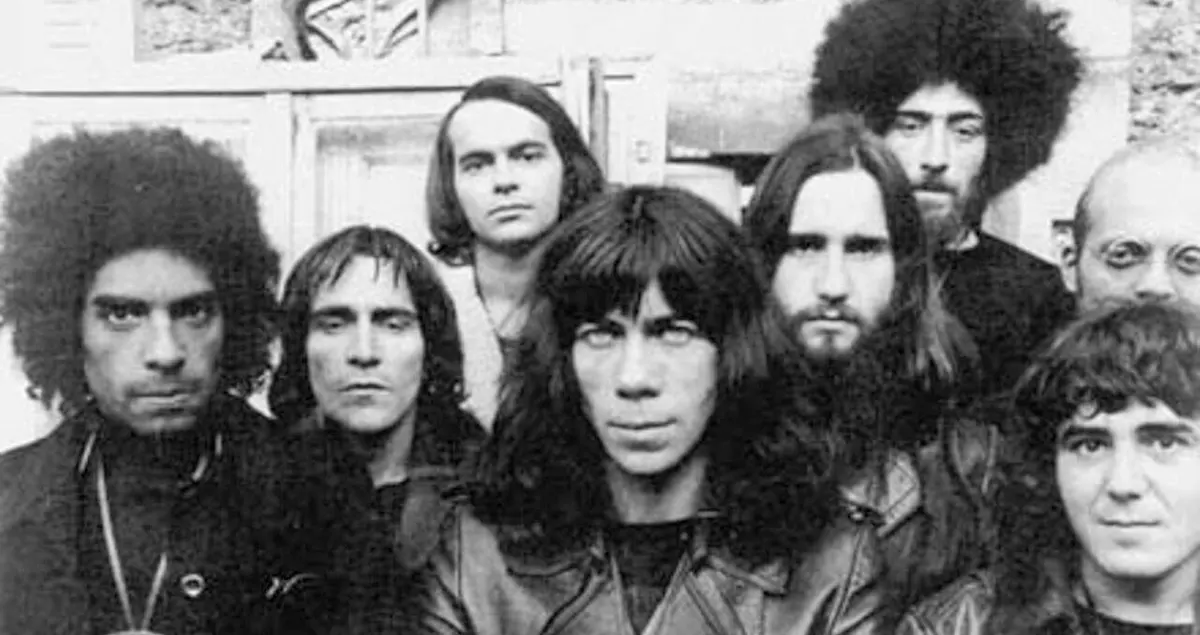
Magma: Ritual, Myth, and the Most Radical World-Building in Progressive Rock
Progressive rock often expands music outward — toward structure, narrative, or atmosphere. Magma did something far more extreme: they built a closed universe. Their music does not merely reference concepts or themes; it exists inside a self-contained mythology, complete with its own language, cosmology, and emotional logic.
Magma are not a progressive rock band in the conventional sense.
They are a ritualistic system, using sound as a tool for belief, repetition, and transformation.
Prog Rock History — Where Magma Stand
When Magma emerged in the early 1970s, progressive rock was already stretching toward classical forms and conceptual albums. Yet even within this experimental climate, Magma felt alien. While British prog explored expansion and sophistication, Magma pursued total immersion.
Rooted in jazz, classical choral traditions, and the spiritual intensity of composers like Stravinsky and Coltrane, Magma rejected rock’s narrative conventions entirely. Instead, they developed Zeuhl — a genre defined by martial rhythms, chanting vocals, and hypnotic repetition.
Historically, Magma occupy progressive rock’s most radical frontier. They are not an extension of the genre, but a parallel civilization built alongside it.
Creative Phases and the Zeuhl Identity
The Birth of a Mythos (1970–1972)
Founded by drummer and composer Christian Vander, Magma were conceived as a vehicle for a singular vision. From the outset, the band introduced the Kobaïan mythology — a science-fiction narrative centered on exile, spiritual decay, and transcendence.
Early compositions established key elements: relentless rhythmic drive, choral vocal arrangements, and the use of an invented language to detach meaning from everyday interpretation.
The Ritual Core (1973–1976)
This period represents Magma at their most defining. Long-form compositions dominate, structured around repetition, tension, and release rather than conventional development. Music unfolds like a ceremony, demanding surrender rather than analysis.
Vander’s drumming functions as both propulsion and command, while vocals operate collectively, emphasizing incantation over individuality.
Refinement and Reinterpretation (Late 1970s–1980s)
As Magma evolved, compositions became more refined without losing intensity. Earlier material was revisited and reshaped, reinforcing the sense that Magma’s catalog is not a sequence of albums, but a living body of work.
Rather than moving forward stylistically, the band deepened their internal logic.
Albums by Function, Not Ranking
The Foundational Rite: Mëkanïk Dëstruktïẁ Kömmandöh (1973)
This album is Magma’s defining statement. Built on repetition, choral force, and rhythmic inevitability, it functions less as an album and more as an initiation ritual. Its influence extends far beyond progressive rock.
The Mythological Expansion: Köhntarkösz (1974)
Here, Magma deepen their cosmology. The music is more spacious, but no less intense, exploring transformation through gradual accumulation rather than immediate force.
The Choral Summit: Üdü Wüdü (1976)
This album emphasizes vocal and rhythmic interplay, highlighting Magma’s communal approach. It reinforces the band’s identity as a collective rather than a platform for individual expression.
The Reflective Reinterpretation: Attahk (1978)
Often viewed as more accessible, this album introduces elements of funk and soul without abandoning Magma’s core discipline. It reflects adaptation within a rigid internal system.
Language, Repetition, and Trance
Magma’s use of the Kobaïan language is central to their effect. By removing semantic familiarity, the band transform vocals into pure emotional signals. Meaning emerges through repetition, tone, and intensity, not narrative clarity.
Musically, repetition is not static. It functions as pressure, gradually reshaping perception. Rhythms lock into cycles, harmonies stack, and tension accumulates until release feels inevitable.
Listening to Magma is less like hearing music and more like entering a trance state.
Where to Start Listening — Entry Points by Listener Type
- Ritual-driven listeners: Mëkanïk Dëstruktïẁ Kömmandöh
- Conceptual explorers: Köhntarkösz
- Choral-focused listeners: Üdü Wüdü
- Jazz-inclined prog fans: Attahk
- Curious initiates: Mëkanïk Dëstruktïẁ Kömmandöh
Each entry point reveals a different aspect of Magma’s closed universe, but all demand commitment.
Why Magma Can Be Challenging
Magma are confrontational by design. Repetition can feel oppressive, vocals can seem authoritarian, and the absence of familiar structure resists casual listening. The invented language removes lyrical comfort, leaving emotion exposed and raw.
Yet these challenges define Magma’s importance. They do not offer choice or interpretation — they offer submission to process.
Influence and Legacy
Magma’s influence is vast but indirect. They shaped avant-prog, experimental metal, and extreme music genres that value ritual, repetition, and intensity. Zeuhl became a lineage rather than a style, inspiring bands to build their own internal systems rather than imitate surface traits.
Magma demonstrated that progressive rock could become total art, unconcerned with accessibility or consensus.
What Prog Rock Would Lose Without Magma
Without Magma, progressive rock would lose its most radical experiment in world-building. The genre might still explore narrative, structure, and atmosphere, but it would lack proof that music could function as belief system rather than expression.
Magma did not seek to entertain.
They sought to transform.
And in doing so, they expanded the very definition of what progressive rock could be.