
Emerson, Lake & Palmer: Virtuosity, Spectacle, and the Limits of Progressive Rock
Progressive rock has always balanced ambition with restraint, but Emerson, Lake & Palmer pushed that balance closer to its breaking point. Where other progressive bands sought integration or atmosphere, ELP foregrounded virtuosity itself. Their music did not merely include technical skill — it made technical mastery the central event.
In doing so, Emerson, Lake & Palmer defined both the peak of progressive rock’s instrumental confidence and the moment when excess became impossible to ignore.
Prog Rock History — Where Emerson, Lake & Palmer Stand
By the early 1970s, progressive rock had already established its core principles: extended composition, classical influence, and a rejection of conventional rock simplicity. Emerson, Lake & Palmer entered this landscape not as reformers, but as maximalists.
They treated progressive rock as a stage large enough for virtuosity to become spectacle. Classical adaptations, extended keyboard solos, and dramatic arrangements were not supporting elements — they were the main attraction. In historical terms, ELP represent progressive rock’s most unapologetic embrace of technical dominance.
Where Yes built architectural coherence and King Crimson enforced tension, ELP pursued display. Their success demonstrated how far progressive rock could stretch before the question of restraint became unavoidable.
Creative Phases and Lineup Identity
Formation and Immediate Impact (1970–1971)
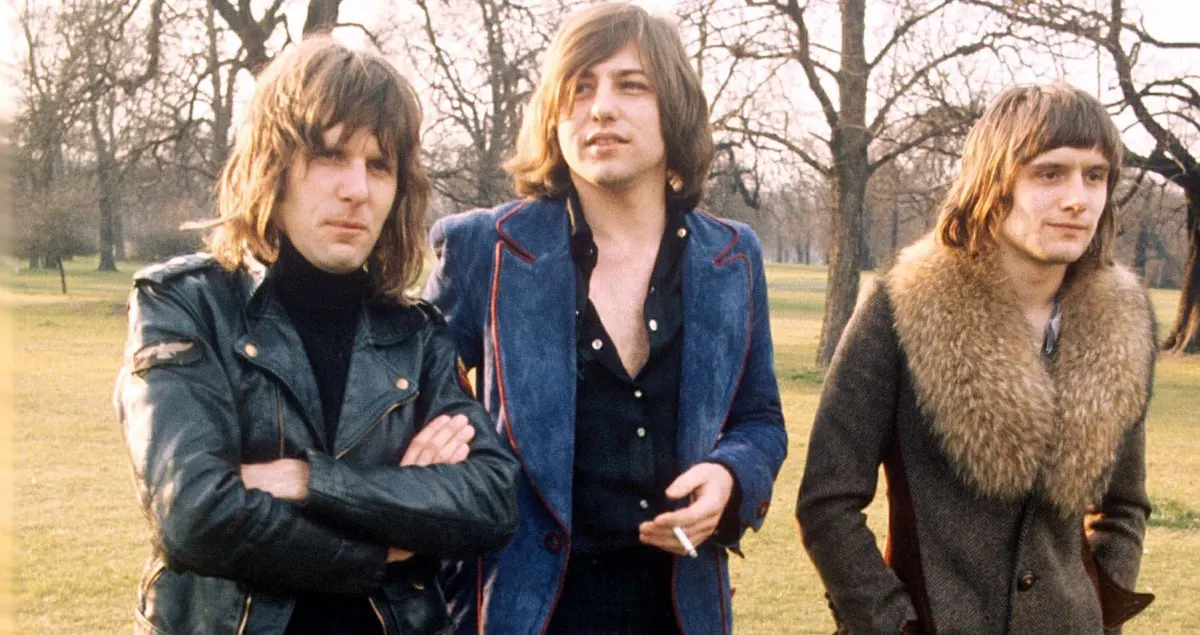
ELP formed from established musicians, each bringing a strong individual identity. Keith Emerson’s background in classical and jazz, Greg Lake’s melodic sensibility, and Carl Palmer’s rhythmic precision created a trio built on contrast rather than blend.
From the outset, the band positioned itself as a vehicle for technical exploration. There was no gradual evolution — Emerson, Lake & Palmer arrived fully formed, ambitious, and unrestrained.
The Ascendancy of Virtuosity (1971–1973)
This period represents ELP at their most influential. Albums released during these years placed instrumental performance at the center of progressive rock discourse. Extended compositions, classical reinterpretations, and elaborate arrangements defined their sound.
The trio format intensified the focus on individual performance, leaving little room for subtlety. Every gesture mattered, and every note carried weight.
Excess and Saturation (1974–1977)
As progressive rock’s popularity peaked, so did ELP’s scale. Larger compositions, more elaborate concepts, and increasingly grand presentations pushed the band toward diminishing returns. The music remained technically impressive, but cohesion began to suffer.
This phase crystallized the criticisms often leveled at progressive rock: self-indulgence, overextension, and emotional distance.
Albums by Function, Not Ranking
The Arrival Statement: Emerson, Lake & Palmer (1970)
This debut album establishes the band’s identity immediately. Classical adaptation and aggressive keyboard work define a sound that prioritizes technical authority over subtle integration.
The Virtuosity Manifesto: Tarkus (1971)
Tarkus represents ELP’s philosophy in its purest form. Structured as a continuous suite, it transforms virtuosity into narrative force. For supporters, it is a triumph of ambition; for critics, an early warning sign.
The Crossover Monument: Brain Salad Surgery (1973)
Often considered the band’s most complete work, this album balances complexity with accessibility. It demonstrates how spectacle and coherence can briefly coexist.
The Point of Saturation: Works Vol. 1 (1977)
This album functions as a document of excess. Individual showcases replace collective focus, illustrating the limits of progressive rock’s emphasis on virtuosity.
Musical Language and Aesthetic Philosophy
Emerson, Lake & Palmer’s aesthetic centers on technical mastery as meaning. Rather than using virtuosity to serve atmosphere or narrative, they present it as an end in itself. Classical motifs are not reinterpreted so much as recontextualized, placed within a rock framework that amplifies their intensity.
Emotion, when present, often emerges through scale rather than intimacy. The result is music that inspires awe more readily than empathy.
Where to Start Listening — Entry Points by Listener Type
- Classical crossover listeners: Tarkus
- Classic prog enthusiasts: Brain Salad Surgery
- Keyboard-focused listeners: Emerson, Lake & Palmer
- Concept album explorers: Works Vol. 1
- Curious skeptics: Pictures at an Exhibition
Each entry point highlights a different aspect of the band’s identity, from cohesion to overreach.
Why Emerson, Lake & Palmer Can Be Challenging
ELP’s music can feel overwhelming. The constant foregrounding of technical skill leaves little space for subtlety, and emotional connection can feel secondary to performance. For some listeners, the absence of restraint undermines the music’s impact.
Yet these same qualities define the band’s significance. Emerson, Lake & Palmer confront listeners with progressive rock’s most extreme tendencies, forcing a reckoning with the genre’s priorities.
Influence and Legacy
ELP influenced generations of musicians by demonstrating the theatrical and technical possibilities of rock instrumentation. Keyboardists, in particular, drew inspiration from Keith Emerson’s approach to performance and composition.
Equally important, the band’s legacy shaped critical discourse around progressive rock. Their excess became a reference point — both as aspiration and caution.
What Prog Rock Would Lose Without Emerson, Lake & Palmer
Without Emerson, Lake & Palmer, progressive rock would lack its most visible confrontation with scale. The genre might still achieve elegance and narrative depth, but it would be missing the moment when virtuosity was tested to its limits.
ELP revealed both the power and the danger of ambition without restraint. In doing so, they helped define progressive rock not only by what it could become, but by where it needed to stop.