
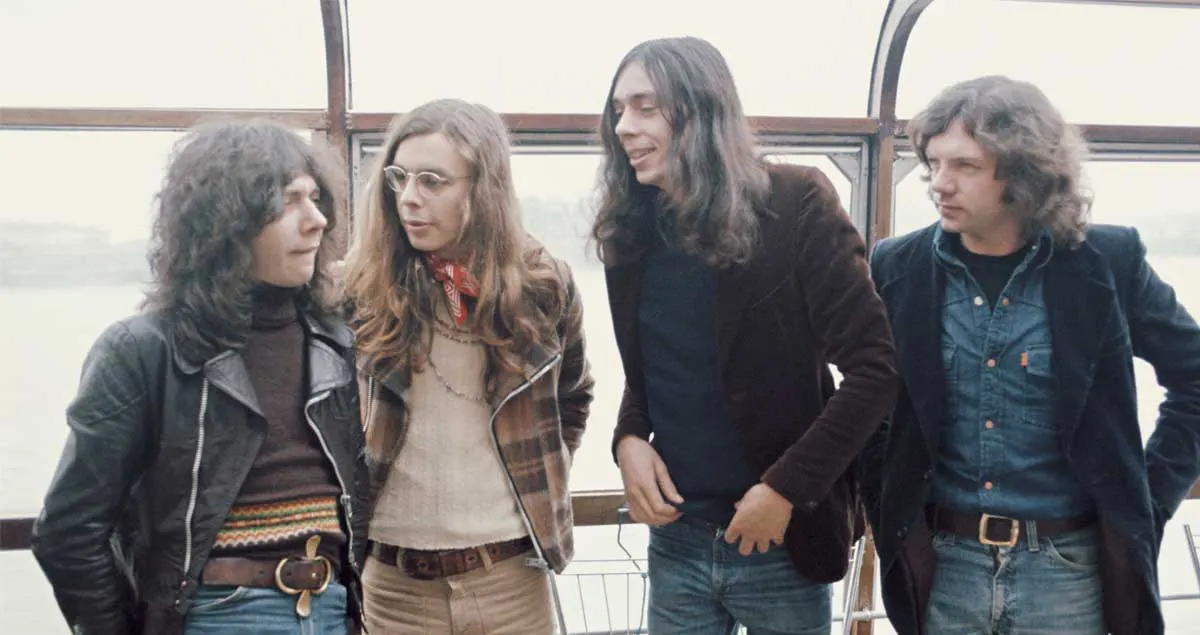
Camel: Melody, Restraint, and the Quiet Intelligence of Progressive Rock
Progressive rock is often remembered for scale, virtuosity, or conceptual ambition, but Camel represent a different ideal: clarity through restraint. Where many progressive bands emphasized complexity as a statement, Camel treated complexity as something to be absorbed quietly, embedded within melody and atmosphere rather than placed on display.
Camel did not attempt to redefine progressive rock by force.
They refined it through patience, lyricism, and emotional continuity.
Prog Rock History — Where Camel Stands
By the mid-1970s, progressive rock had reached a point of saturation. Technical excess, theatrical ambition, and conceptual sprawl had become familiar, and in some cases exhausting. Camel emerged during this moment not as reactionaries, but as moderators.
Their music preserved progressive rock’s structural ambition while stripping away confrontation and spectacle. Instead of dramatic contrasts, Camel favored gradual development. Instead of ideological statements, they offered mood and flow.
Historically, Camel occupy the space between symphonic prog and pastoral introspection. They showed that progressive rock could remain sophisticated without becoming aggressive or ironic — a quality that would later influence melodic prog and post-progressive aesthetics.
Creative Phases and Lineup Evolution
Formation and Early Direction (1973–1974)
Camel formed with a clear musical identity from the outset. Their self-titled debut introduced a sound rooted in melody, extended instrumental passages, and a calm, contemplative tone. Unlike many peers, Camel did not rely on dramatic vocal presence or lyrical spectacle to define their character.
Andrew Latimer’s guitar work quickly emerged as the band’s emotional center, emphasizing phrasing and sustain over flash.
The Melodic Peak (1974–1976)
This period represents Camel at their most influential. Albums released during these years refined the band’s balance between structure and atmosphere, producing music that felt expansive without excess.
The band’s compositions favored cohesion over contrast, allowing themes to evolve organically rather than collide. This approach placed Camel closer to cinematic progression than traditional rock dynamics.
Subtle Expansion and Transition (Late 1970s)
As progressive rock’s mainstream presence declined, Camel continued to adapt quietly. Their music absorbed elements of jazz and soft rock without abandoning progressive principles. The result was a smoother, more introspective sound that preserved continuity rather than signaling rupture.
This phase reinforced Camel’s reputation as a band uninterested in trends or confrontation.
Albums by Function, Not Ranking
The Defining Statement: Mirage (1974)
Mirage establishes Camel’s melodic philosophy with clarity. Extended instrumental passages unfold patiently, guided by lyrical guitar work and subtle keyboard textures. The album defines the band’s preference for emotional coherence over dramatic contrast.
The Emotional Summit: The Snow Goose (1975)
This album represents Camel’s most distinctive achievement. Entirely instrumental and conceptually unified, it transforms narrative into atmosphere. Rather than telling a story through words, The Snow Goose conveys emotion through tone, pacing, and thematic recurrence.
The Balanced Synthesis: Moonmadness (1976)
Often regarded as Camel’s most accessible work, Moonmadness integrates melody, structure, and introspection seamlessly. It captures the band at their most confident, balancing warmth with compositional discipline.
The Transitional Work: Rain Dances (1977)
This album reflects Camel’s gradual stylistic evolution. Jazz influences and refined arrangements signal adaptation rather than compromise, preserving the band’s identity while expanding its palette.
Musical Language and Emotional Core
Camel’s music prioritizes melodic continuity. Themes recur gently, transitions are smooth, and instrumental voices complement rather than compete. Andrew Latimer’s guitar functions as a narrative guide, shaping emotional direction without dominating the ensemble.
Lyrics, when present, remain understated, often secondary to the instrumental narrative. This reinforces Camel’s emphasis on mood over message, inviting immersion rather than interpretation.
Where to Start Listening — Entry Points by Listener Type
- Melody-oriented listeners: Moonmadness
- Instrumental prog enthusiasts: The Snow Goose
- Classic symphonic prog fans: Mirage
- Smooth prog explorers: Rain Dances
- Newcomers to prog: Moonmadness
Each entry point reveals Camel’s commitment to emotional clarity within progressive structure.
Why Camel Can Be Challenging
Camel’s restraint can be mistaken for lack of ambition. Listeners seeking dramatic shifts, lyrical confrontation, or virtuosic spectacle may find the band understated. The absence of overt tension requires patience and attentiveness.
Yet this quietness is central to Camel’s value. Their music rewards sustained listening, revealing depth through subtle variation rather than immediate impact.
Influence and Legacy
Camel influenced progressive rock by demonstrating that complexity need not be aggressive. Their melodic approach shaped later generations of atmospheric and melodic prog bands, offering an alternative to both maximalism and irony.
They also helped establish instrumental storytelling as a legitimate progressive pathway, particularly through works that favor mood over narrative.
What Prog Rock Would Lose Without Camel
Without Camel, progressive rock would lose its most graceful expression of restraint. The genre might still achieve technical brilliance and conceptual scale, but it would lack a reminder that progression can be quiet.
Camel proved that progressive rock does not always need to challenge the listener.
Sometimes, it needs to carry them gently forward.