
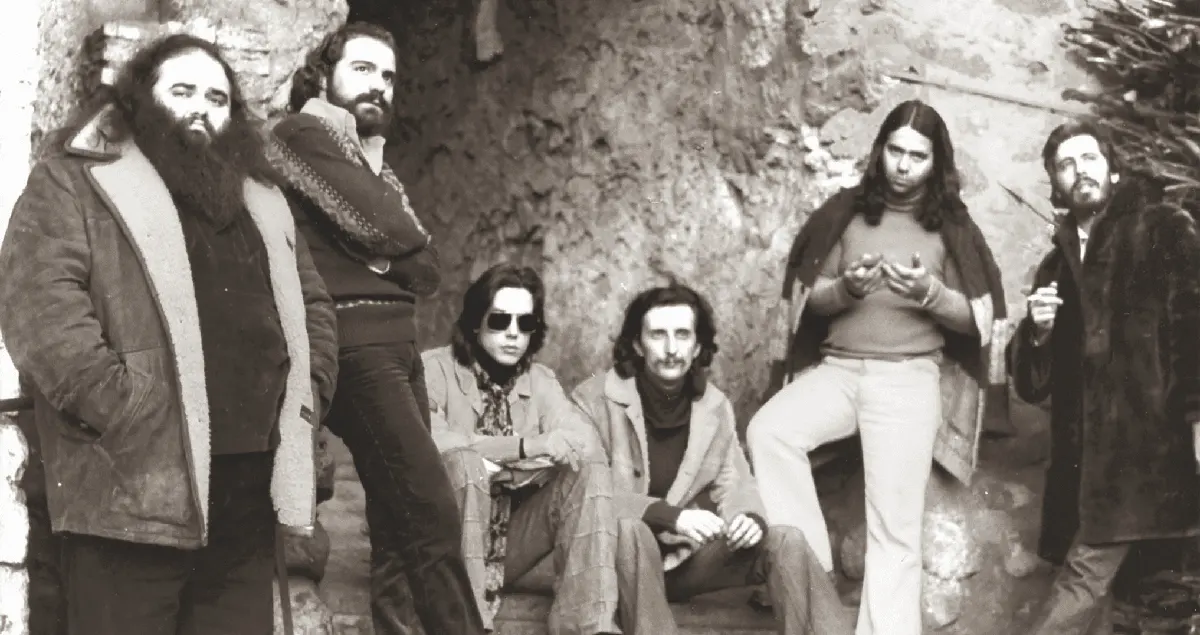
Banco del Mutuo Soccorso: Drama, Philosophy, and the Emotional Gravity of Progressive Rock
Progressive rock is often discussed in terms of structure or experimentation, but Banco del Mutuo Soccorso approached the genre through drama and emotional intensity. Where many bands emphasized form or technical display, Banco placed human tension, philosophical weight, and theatrical expression at the center of their music.
Banco did not treat progressive rock as an abstract exercise.
They treated it as a stage for existential conflict.
Prog Rock History — Where Banco del Mutuo Soccorso Stand
Emerging from Italy’s fertile progressive scene in the early 1970s, Banco del Mutuo Soccorso developed alongside Premiata Forneria Marconi but followed a markedly different path. While PFM emphasized melodic flow and European elegance, Banco embraced gravity and confrontation.
Italian progressive rock, shaped by classical opera, literature, and political tension, often leaned toward emotional extremity. Banco became its most dramatic and philosophically charged representative. Their music foregrounded conflict — between individuals, ideas, and inner states — rather than atmosphere or refinement.
Historically, Banco stand as progressive rock’s most operatic voice, transforming the genre into a vehicle for intellectual and emotional struggle.
Creative Phases and Core Identity
Formation and Immediate Intensity (1971–1972)
Banco emerged fully formed. From their earliest recordings, the band displayed a commanding sense of identity built around dual keyboards, powerful rhythm, and expressive vocals. Unlike groups that evolved gradually, Banco arrived with a clear artistic vision.
Vittorio Nocenzi’s keyboard work provided symphonic density, while Francesco Di Giacomo’s vocal presence introduced a theatrical authority rare in progressive rock.
Philosophical and Musical Consolidation (1972–1974)
This period marks Banco at their most influential. Albums released during these years fused complex structures with lyrical depth, creating music that felt both monumental and emotionally direct. Rather than obscuring meaning behind abstraction, Banco confronted listeners with ideas and emotion head-on.
Their compositions often feel like debates set to music, oscillating between introspection and eruption.
Transition and Refinement (Mid–Late 1970s)
As the progressive rock landscape shifted, Banco refined their approach. Arrangements became tighter, and experimentation gave way to clarity without sacrificing intensity. This phase reflects adaptation without surrender, preserving philosophical engagement while adjusting scale.
Albums by Function, Not Ranking
The Defining Declaration: Banco del Mutuo Soccorso (1972)
This debut album establishes Banco’s identity immediately. Dense keyboard textures, dramatic vocals, and philosophical urgency combine to form one of Italian prog’s most forceful statements.
The Existential Monument: Darwin! (1972)
Often regarded as Banco’s masterpiece, Darwin! explores evolution, humanity, and destiny through extended compositions. It exemplifies the band’s ability to merge scientific concept with emotional expression.
The Human Drama: Io Sono Nato Libero (1973)
This album shifts focus toward individual freedom and internal conflict. Its balance of aggression and introspection highlights Banco’s emotional range and compositional confidence.
The Transitional Reflection: Come in un’Ultima Cena (1976)
Here, Banco temper scale with restraint. The album reflects maturity and adaptation, preserving philosophical depth while refining form.
Language, Voice, and Philosophical Weight
Banco’s lyrics are central to their impact. Sung in Italian, they draw from philosophy, science, and existential inquiry. Language functions not as ornament but as argument, delivered with urgency and conviction.
Francesco Di Giacomo’s vocals elevate this material into dramatic performance. His voice conveys conflict, doubt, and resolve, transforming songs into emotional confrontations rather than abstract reflections.
Musically, the band favors density and tension. Dual keyboards create symphonic mass, while rhythmic shifts reinforce instability and urgency.
Where to Start Listening — Entry Points by Listener Type
- Philosophically inclined listeners: Darwin!
- Classic Italian prog explorers: Banco del Mutuo Soccorso
- Emotion-driven listeners: Io Sono Nato Libero
- Mature prog fans: Come in un’Ultima Cena
- First-time Banco listeners: Darwin!
Each entry point highlights a different facet of Banco’s dramatic identity.
Why Banco del Mutuo Soccorso Can Be Challenging
Banco’s intensity can feel overwhelming. Dense arrangements, dramatic vocals, and philosophically heavy lyrics demand attention and emotional openness. Language barriers may also heighten the challenge for non-Italian listeners.
Yet these challenges define the band’s importance. Banco do not invite casual listening; they demand engagement and confrontation.
Influence and Legacy
Banco del Mutuo Soccorso influenced progressive rock by legitimizing emotional extremity and philosophical seriousness within the genre. They shaped the identity of Italian progressive rock and demonstrated that national cultural traditions could deepen progressive expression rather than limit it.
Their work continues to resonate with listeners drawn to progressive rock’s darker, more intellectual dimensions.
What Prog Rock Would Lose Without Banco del Mutuo Soccorso
Without Banco, progressive rock would lose its most dramatic conscience. The genre might still explore elegance, structure, and atmosphere, but it would lack a voice willing to confront human conflict with operatic force.
Banco proved that progressive rock could be passionate without being simplistic, intellectual without being distant.
They did not soften prog.
They intensified it.