
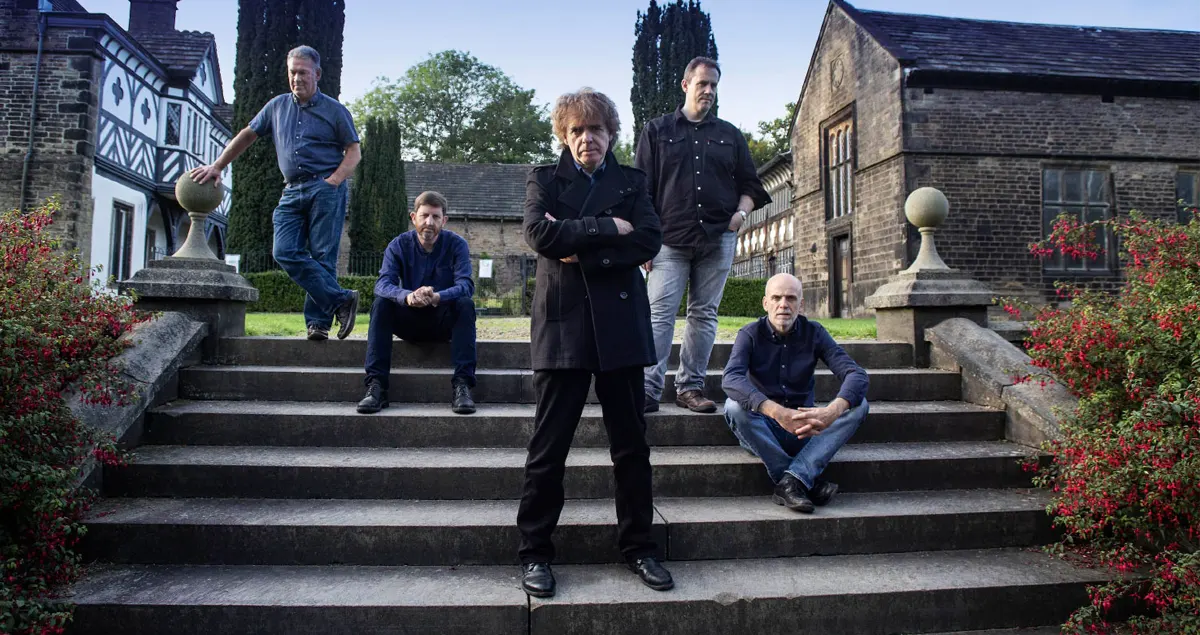
IQ: Structural Discipline, Darkness, and the Second Wave of Neo-Progressive Rock
If Marillion humanized progressive rock for a new era, IQ hardened its structure. Where emotion and narrative took center stage in early neo-prog, IQ emphasized form, atmosphere, and compositional patience, restoring a sense of gravity that echoed classic prog without imitation.
IQ did not chase accessibility.
They chose coherence, restraint, and long-form thinking.
Prog Rock History — Where IQ Stand
By the mid-1980s, progressive rock had splintered into survival strategies. Some bands streamlined toward pop, others retreated into nostalgia. IQ emerged within the neo-prog movement but positioned themselves differently from its more theatrical or emotionally explicit peers.
Historically, IQ represent neo-prog’s structural conscience. They preserved the architectural instincts of classic progressive rock—extended forms, thematic recurrence, and atmospheric weight—while operating within a modern, post-punk cultural landscape. Their music feels less like revival and more like continuation under constraint.
Within the broader prog timeline, IQ occupy the role of stabilizer: ensuring that progressive rock’s core principles endured beyond fashion.
Creative Phases and Consistent Identity
Formation and Early Definition (1981–1984)
IQ formed with a clear commitment to progressive structure. Early recordings reveal a band focused on long arcs, somber atmosphere, and deliberate pacing. Rather than foregrounding virtuosity, they emphasized ensemble cohesion and thematic development.
This period established the band’s signature mood: introspective, shadowed, and patient.
Consolidation and Maturity (Mid-1980s–1990s)
As neo-prog gained visibility, IQ resisted simplification. Albums released during this era deepen their commitment to extended composition and emotional restraint. The band refined their sound without altering its foundations, prioritizing continuity over reinvention.
This phase solidified IQ’s reputation as a band uninterested in trends.
Persistence and Late-Era Clarity (2000s–Present)
While many peers faded or fractured, IQ continued to produce work aligned with their original vision. Later releases emphasize clarity and refinement, demonstrating that progressive rock can mature without dilution.
This longevity reinforces IQ’s identity as a principled, inward-facing progressive band.
Albums by Function, Not Ranking
The Structural Statement: Tales from the Lush Attic (1983)
This debut captures IQ’s foundational approach. Long-form compositions, atmospheric keyboards, and disciplined pacing define a sound rooted in structure rather than spectacle.
The Atmospheric Core: The Wake (1985)
Often considered a defining work, this album balances accessibility with depth. Its cohesion and emotional restraint illustrate IQ’s ability to maintain intensity without overt drama.
The Mature Reflection: Ever (1993)
Here, IQ deepen their introspective tendencies. The album emphasizes emotional continuity and structural clarity, reflecting a band comfortable with patience and nuance.
The Enduring Vision: The Road of Bones (2014)
This album demonstrates IQ’s continued relevance. Dark, expansive, and carefully constructed, it confirms that the band’s principles remain intact decades after their emergence.
Musical Language and Emotional Restraint
IQ’s music prioritizes atmosphere and form. Themes recur subtly, arrangements unfold gradually, and dynamics are controlled rather than explosive. Keyboards provide harmonic weight and texture, guitars reinforce mood rather than dominate, and vocals function as narrative anchors rather than theatrical focal points.
Lyrically, IQ favor introspection and ambiguity. Meaning is suggested rather than declared, reinforcing the band’s emphasis on internal coherence over immediate impact.
Where to Start Listening — Entry Points by Listener Type
- Neo-prog traditionalists: The Wake
- Structure-focused listeners: Tales from the Lush Attic
- Atmosphere seekers: Ever
- Modern prog veterans: The Road of Bones
- Patient listeners: Subterranea
Each entry point reflects IQ’s commitment to continuity and discipline.
Why IQ Can Be Challenging
IQ demand time. Their music avoids hooks, minimizes dramatic release, and resists casual listening. Emotional expression is restrained, and structural patience may feel austere to listeners accustomed to immediacy.
Yet this restraint defines their value. IQ reward listeners who engage deeply, offering meaning through accumulation rather than surprise.
Influence and Legacy
IQ influenced neo-progressive rock by reinforcing structure as identity. They demonstrated that progressive music could survive without spectacle, relying instead on form, atmosphere, and long-term coherence. Their persistence helped legitimize neo-prog as more than a transitional phase.
They stand as proof that progressive rock can endure by remaining faithful to its core logic.
What Progressive Rock Would Lose Without IQ
Without IQ, neo-progressive rock would lose its most disciplined voice. The genre might retain emotion and narrative, but it would lack a model for structural seriousness without excess.
IQ ensured that progressive rock’s evolution did not abandon its architectural instincts.
They did not redefine prog.
They held it steady.